
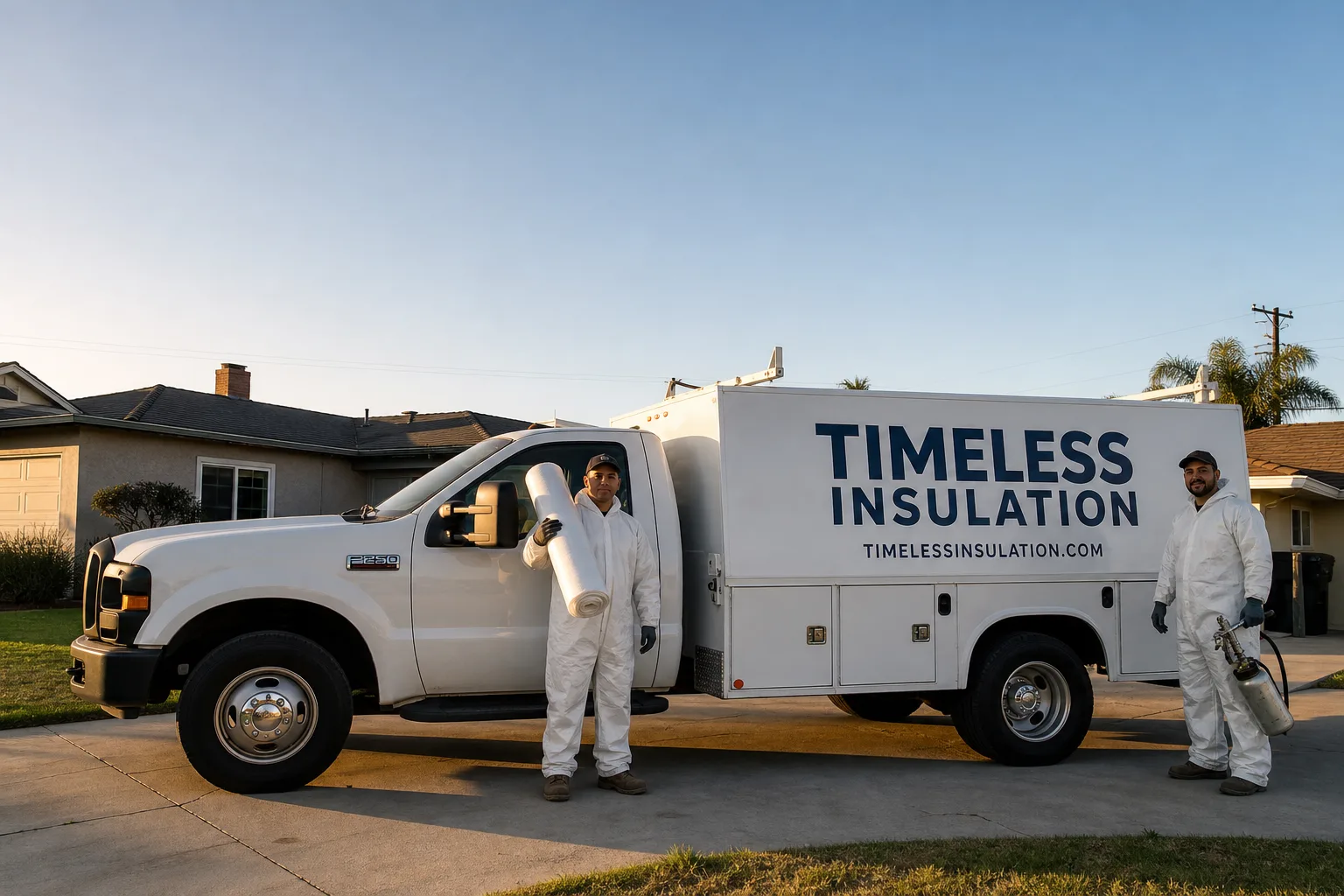
Fast, Reliable Spray Foam Insulation Across Koreatown
Spray foam insulation in Koreatown solves a problem most 90005 property owners live with every summer: top-floor units that bake under flat roofs and walls that let the afternoon heat pour in through uninsulated stucco-over-wood-frame cavities. We’ve worked on enough two- and three-story buildings along Wilshire, Olympic, and 6th Street to know exactly what’s behind those walls. Our crews reach Koreatown the same day for quotes, and we stage every job around occupied units so tenants stay put. Call (866) 507-5394 and Nelson Ibarra or one of our techs will walk you through what your building actually needs.
Why Timeless Insulation Is Koreatown’s Preferred Spray Foam Insulation Company
Koreatown’s housing stock is unlike most of LA. Most of the 90005 buildings we work in went up between the 1960s and 1980s, with original 2×4 wall cavities, zero insulation, and flat or low-slope roofs that soak up sun all afternoon. Crews that mostly insulate newer single-family homes get surprised by the dust settlement, the uneven cavities, and the rent-controlled tenant logistics. We don’t. Our Spray Foam Insulation team has sprayed dozens of Koreatown multifamily buildings, and Nelson Ibarra has walked property owners through everything from air sealing to full cavity fills that meet Title 24 without emptying units.
We carry both Icynene and Demilec product lines, so the open-cell versus closed-cell decision comes down to what your building actually needs, not what’s on our truck. That matters in Koreatown, where an owner trying to cool a hot top-floor rental needs a different foam strategy than someone insulating a garage ceiling or a rim joist. One team, one trade, and eight brands in our portfolio so the recommendation fits the job.
Spray Foam Attic Insulation in Koreatown
Spray foam attic insulation in Koreatown is the fastest lever for cutting cooling bills on 90005’s flat-roof apartment buildings. On a typical summer afternoon, those uninsulated roof decks hit 140°F or higher, and that heat radiates straight down into top-floor units. Open-cell foam sprayed on the underside of the roof deck stops most of that thermal transfer before it reaches ceiling level. For older Koreatown buildings with no original attic insulation at all, attic spray foam typically runs $2,200 to $5,800 depending on square footage, and we often pair it with a reflective cool-roof coating to bounce the sun back before it even heats the deck. That combination drops top-floor temperatures 10 to 15 degrees, without anyone moving out.
Flat Roof Deck Air Sealing
Spray foam applied to the underside of a flat roof deck does two jobs in one pass. It insulates the thermal boundary and seals the dozens of small openings where hot air leaks into the top floor: plumbing vents, electrical penetrations, and the gaps where roof framing meets perimeter walls. On 1960s and 1970s Koreatown walkups, the air sealing effect alone often accounts for a third of the cooling improvement.
Cool-Roof Combination Strategy
Foam alone helps, but Koreatown’s flat roofs bake so intensely that we recommend a reflective cool-roof coating on top of any attic spray foam job. The coating reduces the surface temperature of the deck by 40 to 50 degrees on the hottest days, and the foam handles whatever heat still gets through. Owners get a bigger comfort improvement per dollar than from either measure on its own.
Spray Foam Wall Insulation in Koreatown
Spray foam wall insulation in Koreatown is the right call for 1960s and 1980s stucco-over-wood-frame buildings where the original 2×4 wall cavities were never insulated. West-facing walls along streets like Western Avenue and Normandie Avenue turn into heat sinks by mid-afternoon, and tenants in those units live with rooms that never cool down until after dark. Wall cavity spray foam in Koreatown generally runs $1,800 to $4,500 per unit depending on cavity depth and access. Open-cell Icynene foam is the usual recommendation for occupied buildings because it air-seals the cavity, insulates well at 3.5 inches, and installs through small drilled holes without removing drywall or tenant belongings.
Cavity-Fill Without Demolition
The wall insulation method we use most in Koreatown is drill-and-fill: small access holes through the stucco or interior drywall, foam injected into the cavity, then patch and paint. Units stay occupied, furniture doesn’t move, and the whole process finishes in a day or two per unit depending on wall area. For buildings with original single-pane windows, we recommend treating wall insulation and window upgrades as separate phases, because the wall cavity is where the biggest thermal win lives.
Stucco Caveat
1960s Koreatown stucco has spent decades absorbing dust, and the cavity interiors are rarely clean. If the surfaces aren’t prepped, foam can shrink back and lose adhesion. Our crews inspect the cavity before spraying and clean surfaces where needed. Skipping that step is the most common reason spray foam fails in older Koreatown walls, and we’d rather slow the job down than have the foam pull away a year later.
Trusted Brands We Service in Koreatown
We stock and install spray foam from both Icynene and Demilec, which means Koreatown customers get the right foam chemistry for the job rather than a one-size-fits-all answer. Icynene open-cell does the heavy lifting for wall cavity fills and occupied-unit work. Demilec closed-cell runs denser and adds structural rigidity where it’s needed. For projects where spray foam isn’t the best fit at all, we have GreenFiber blown-in and CertainTeed in the lineup too. The point isn’t the brand; it’s the material match. We carry eight brands so we can recommend the best one for your Koreatown building, not the only one we stock.
Common Spray Foam Insulation Problems We See in Koreatown Homes
- Off-gassing and lingering odor from rushed jobs. When crews spray foam in occupied units without enough cure time, tenants complain about chemical smells for weeks. We stage open-cell applications around ventilation windows and never ask tenants to sleep in a freshly foamed unit the same day.
- Foam shrinkage and adhesion failure on dusty 1960s cavities. Koreatown’s stucco-over-wood-frame walls collect decades of dust and debris inside the cavities. Without proper surface prep, foam pulls away and leaves gaps. We inspect and clean before spraying, which prevents the failure most cheap crews leave behind.
- Moisture trapping behind foam in walls with no vapor barrier. Original 1960s construction in 90005 typically has no vapor barrier behind the stucco. Spraying the wrong foam in the wrong depth can trap moisture against the sheathing, leading to hidden rot and musty smells in rent-controlled units. Open-cell foam breathes more than closed-cell, and we choose chemistry accordingly.
- Overheating that persists because no one touched the roof. We regularly see Koreatown buildings that got wall insulation but still bake in summer because the flat roof deck was never addressed. Insulating walls without the roof is like plugging half the leaks in a boat. The full treatment is both, and that’s how we quote it.
Pricing for Spray Foam Insulation in Koreatown, CA
A typical spray foam attic insulation job in Koreatown runs $2,200 to $5,800, depending on the roof footprint and whether we’re adding a cool-roof coating. Wall cavity spray foam for a single apartment unit generally lands between $1,800 and $4,500, with the lower number for smaller one-bedrooms and the upper end for corner units with long west-facing exposures. Rim joist spray foam runs $900 to $2,400, and garage ceiling spray foam typically falls between $1,100 and $2,800. What moves the number most in 90005 is access: buildings with interior courtyard staging areas are faster to work on than tight lot-line conditions on streets like 6th or Berendo. Call (866) 507-5394 for a free, written estimate with line-item pricing. No obligation, and the quote holds for 30 days.
We Also Serve Cities Near Koreatown
While this page focuses on Spray Foam Insulation in Koreatown, our crews cover the surrounding neighborhoods too. If you own property in Los Angeles, Echo Park, Silver Lake, or Hollywood, the same team and the same eight-brand material lineup apply. Most of those areas share Koreatown’s older housing stock and hot summer roof problems, and we’re familiar with all of them.
Serving Koreatown, CA — Our Local Coverage Area
We’re based in the Koreatown area and know this community well. Use the map below to see our service coverage — if you’re nearby, we can almost certainly help.
FAQs About Spray Foam Insulation in Koreatown
Yes. We stage drill-and-fill wall insulation and attic spray foam around occupied units without displacing tenants. The work happens room by room or cavity by cavity, and tenants stay in place throughout. We use open-cell Icynene foam for most occupied-unit work because it air-seals well, installs through small access holes, and doesn’t require gutting the unit. Call (866) 507-5394 for a free tenant-in-place assessment of your building.
Yes. Spray foaming the underside of a flat roof deck cuts most of the heat transfer from the deck into the top-floor units, and pairing the foam with a reflective cool-roof coating drops top-floor temperatures 10 to 15 degrees. On Koreatown’s 1960s and 1970s apartments with no original attic insulation, this combination is the single most effective cooling upgrade short of replacing the roof. We have completed this exact pairing on buildings in the 90005 zip code, including multi-unit walkups near Wilshire and Olympic.
Wall cavity foam absolutely helps, even with single-pane windows still in place. The walls of a 2×4 stucco-over-wood-frame building account for the bulk of the heat gain, and filling those cavities with open-cell foam changes how the whole unit feels by early evening. Windows are a separate phase, and we tell owners to do walls first because that’s where the bigger thermal win lives. For exact material recommendations on your building, call (866) 507-5394.
The main risk is moisture trapping if the wrong foam chemistry or thickness is used. Older 90005 construction has no vapor barrier behind the stucco, so closed-cell foam in the wrong depth can hold moisture against the sheathing. In most Koreatown wall cavities, we recommend open-cell foam which allows some vapor diffusion and is safer for this construction type. A proper cavity inspection before spraying tells us which material is correct.
Yes, insulation upgrades in Koreatown multifamily buildings must satisfy Title 24 energy standards, and yes, the work can be done while tenants remain in place. Our tenant-in-place methods for both walls and attic assemblies are designed to bring older buildings into compliance without vacancy loss. Nelson Ibarra handles the material selection and installation sequencing for these projects, and we document the work so owners have what they need for compliance records. Call (866) 507-5394 to schedule a walkthrough.
Written by Nelson Ibarra, Owner at Timeless Insulation, serving Koreatown and greater Los Angeles.